Current PhD Students
Published:

Published:
Published:
Published:
Published:
Published:
Published:

Program: MS in Computer Engineering
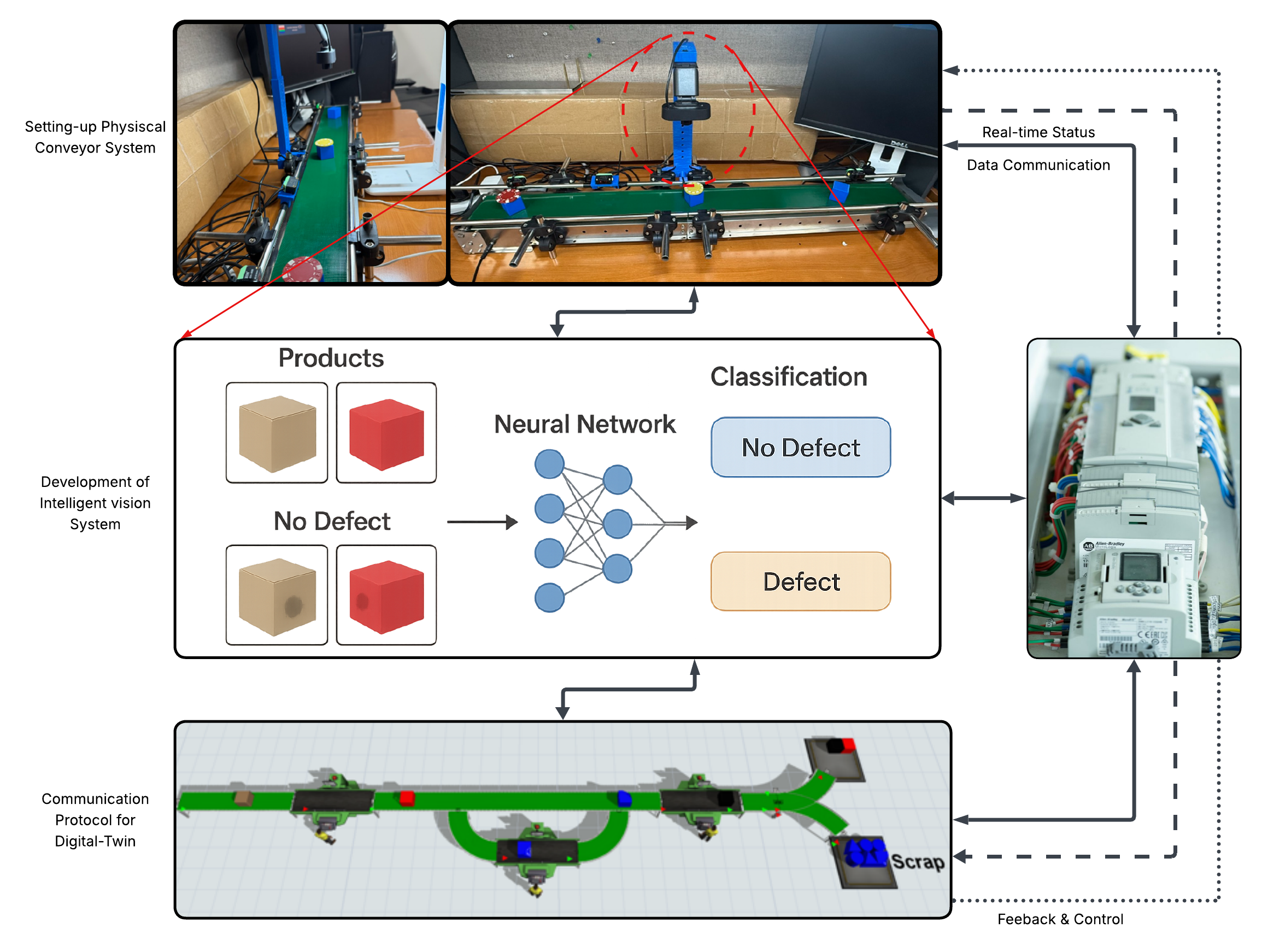
Research Topic: Digital Twin for Real-Time Monitoring and Control of Conveyor Systems Using FlexSim, AI, and PLC Integration
Graduation Date: 07/25/2025
Abstract: This project developed a Digital Twin (DT) of a conveyor system using FlexSim simulation software, the FlexSim Emulation module, a vision system, and a programmable logic controller (PLC). The system integrates multiple sensors, including a vision sensor, to capture real-time data. The vision system uses artificial intelligence (AI) to train a model for object classification. Using a convolutional neural network (CNN) called EfficientNetB0, we developed a classifier capable of identifying object colors, shapes, and defective items not intended for processing. A mini-scale prototype served as a testbed, demonstrating real-time monitoring, remote oversight, and enhanced system control. To demonstrate how a Digital Twin can enhance manufacturing systems, a case study was conducted comparing a traditional inspection scheme with a DT-based inspection approach. A simulation of a standard 8-hour production shift was run using the developed model. The results, based on performance metrics provided by the simulation software, indicate that the DT inspection scheme is more cost-effective, reduces scrap, and improves overall production efficiency.

Program: MS in Systems Engineering
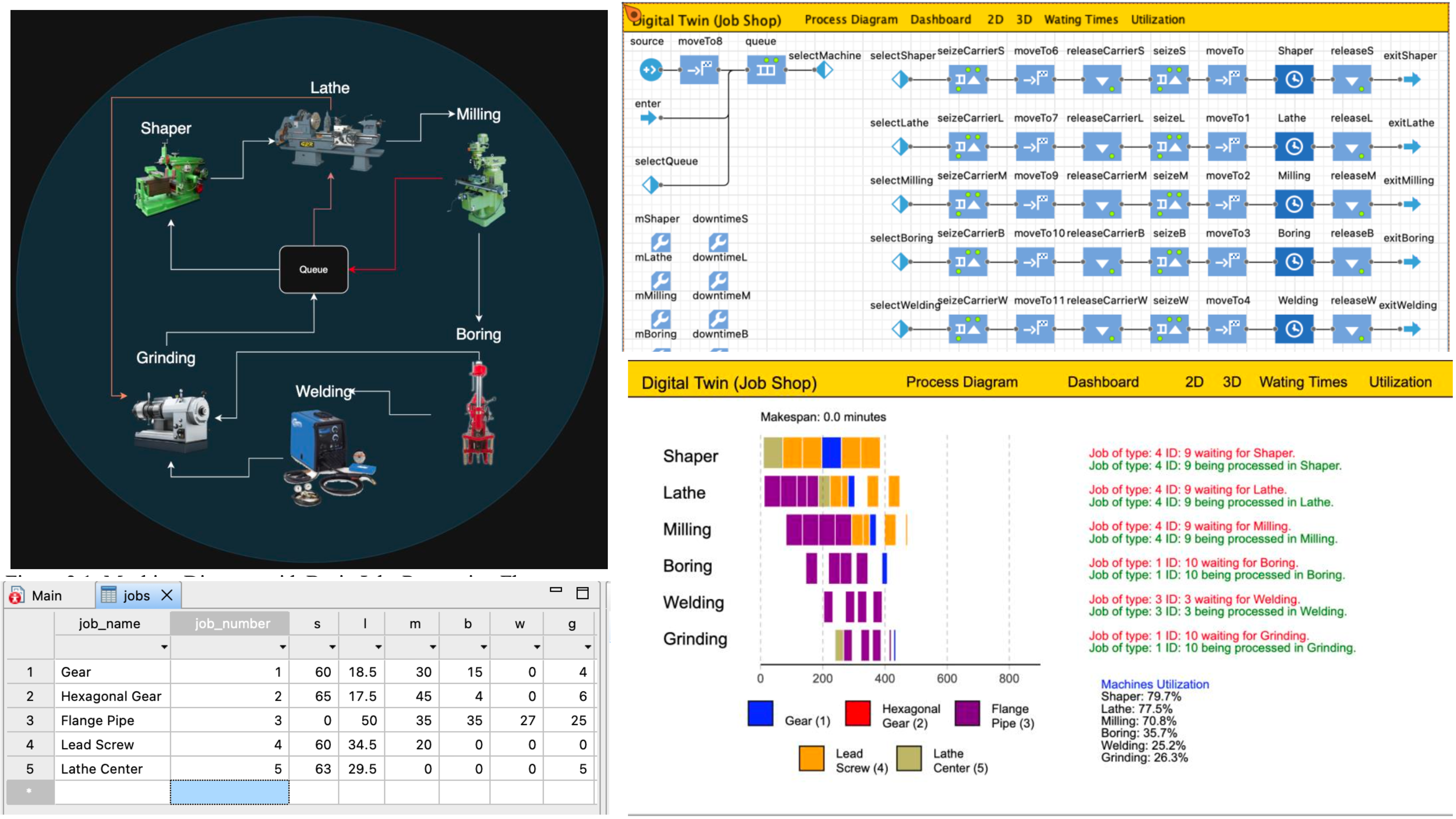
Research Topic: A Digital Twin Approach for Optimizing Job Shops Scheduling: Simulation and Optimization in AnyLogic
Graduation Date: 05/13/2025
Abstract: In complex manufacturing environments such as job shops, machine breakdowns and maintenance activities can significantly disrupt production flow, leading to delays, bottlenecks, and reduced throughput. This thesis presents the development of a digital twin for a job shop system using AnyLogic simulation software to evaluate the effectiveness of fallback routing logic, where jobs are dynamically rerouted to alternative machines when primary machines are unavailable due to scheduled and unscheduled events. The digital twin replicates real-world job shop conditions, incorporating variable job sequences, machine-specific processing times, and both preventive and corrective maintenance schedules. Two scenarios were compared: a baseline configuration with fixed routing with first-in-first-out (FIFO) order and an alternative configuration with fallback logic. Performance was assessed across different KPIs, including makespan, machine utilization, throughput, and average waiting time. Simulation experiments were conducted in a FIFO (First In, First Out) sequence and with downtime events, including both preventive and corrective maintenance. Results were validated through sensitivity analysis and statistical testing. The findings showed that fallback logic reduced makespan by 8.24%, improved throughput by 8.89%, and led to more balanced machine utilization. A two-sample t-test confirmed that the makespan reduction was statistically significant at the 90% confidence level (p = 0.0304). These results suggest that integrating fallback routing into a job shop’s digital twin enhances system flexibility and resilience, enabling more adaptive and efficient production control. The study contributes to the growing body of research on digital twin technology and supports its role in enabling smart, disruption-tolerant manufacturing systems aligned with Industry 4.0 objectives.

Program: MS in Systems Engineering
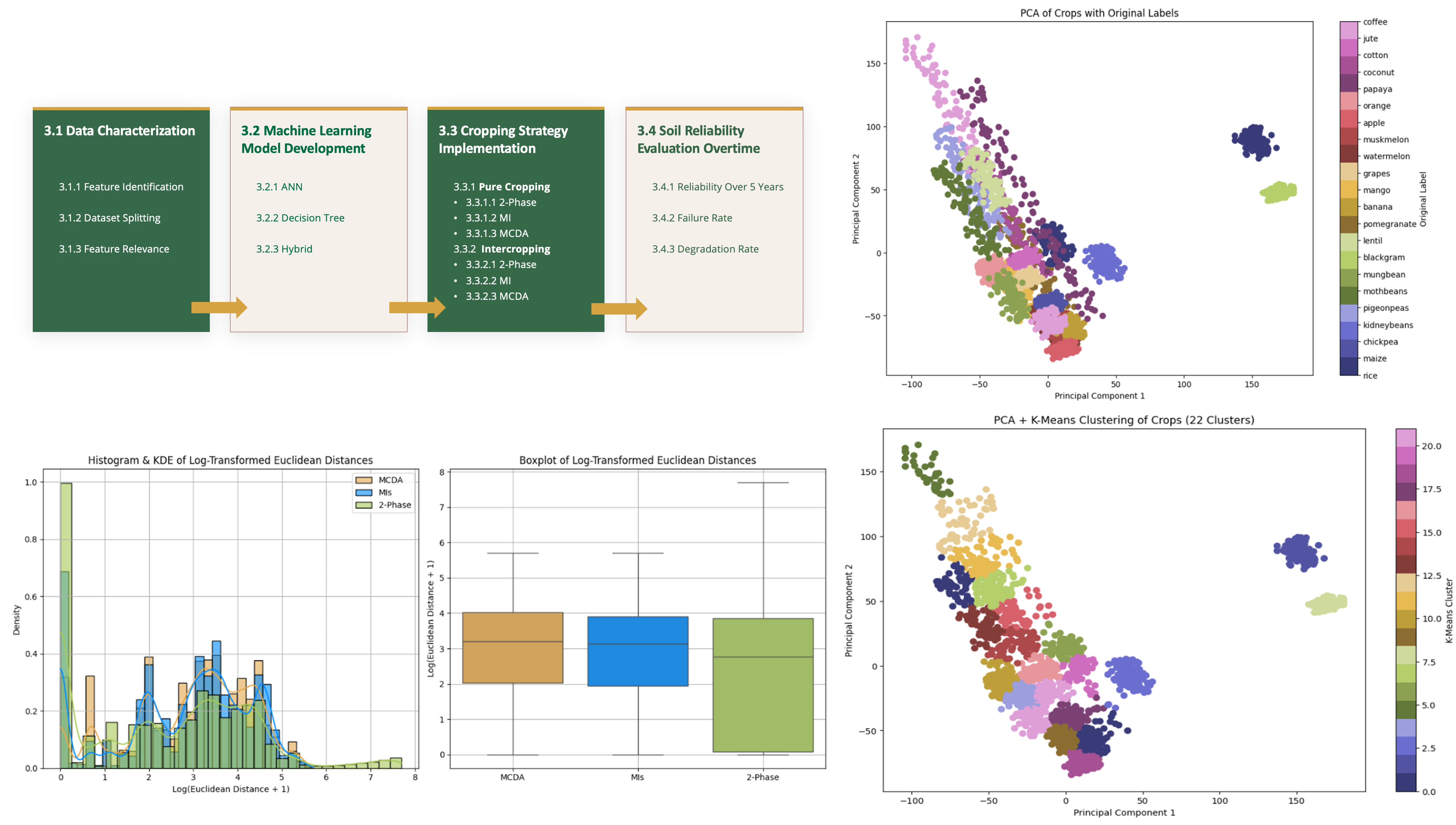
Research Topic: Sustainable Agriculture Through Data-Driven Land and Soil Management for Rural Farming Communities
Graduation Date: 05/16/2025
Abstract: This thesis aims to investigate sustainable farming practices by utilizing a database containing soil, weather, and water data. Additionally, it evaluates cropping strategies using a system that incorporates nutrient dynamics and environmental values. The objective is to monitor, develop predictive models, and assess the impact of both controlled and uncontrolled nutrient variables. This is achieved through the development of an algorithm that provides information on soil health based on datasets and land use, with a particular focus on residual values after harvesting for deeper analytical insights and interpretation. This study focuses on key nutrients, including pH levels, water availability, and temperature forecasts. Utilizing the available dataset, machine learning algorithms are applied to evaluate and compare two main scenarios: pure cropping and intercropping. Additionally, the proposed model assesses the selection process for these features using three methodologies, which guide the identification of either a primary crop or a companion crop, depending on the scenario. This approach optimizes rural farming operations by providing farmers with predictive insights into soil health and nutrient availability, thereby promoting the long-term sustainability impact for both farmers and their communities.

Program: Masters in System Engineering
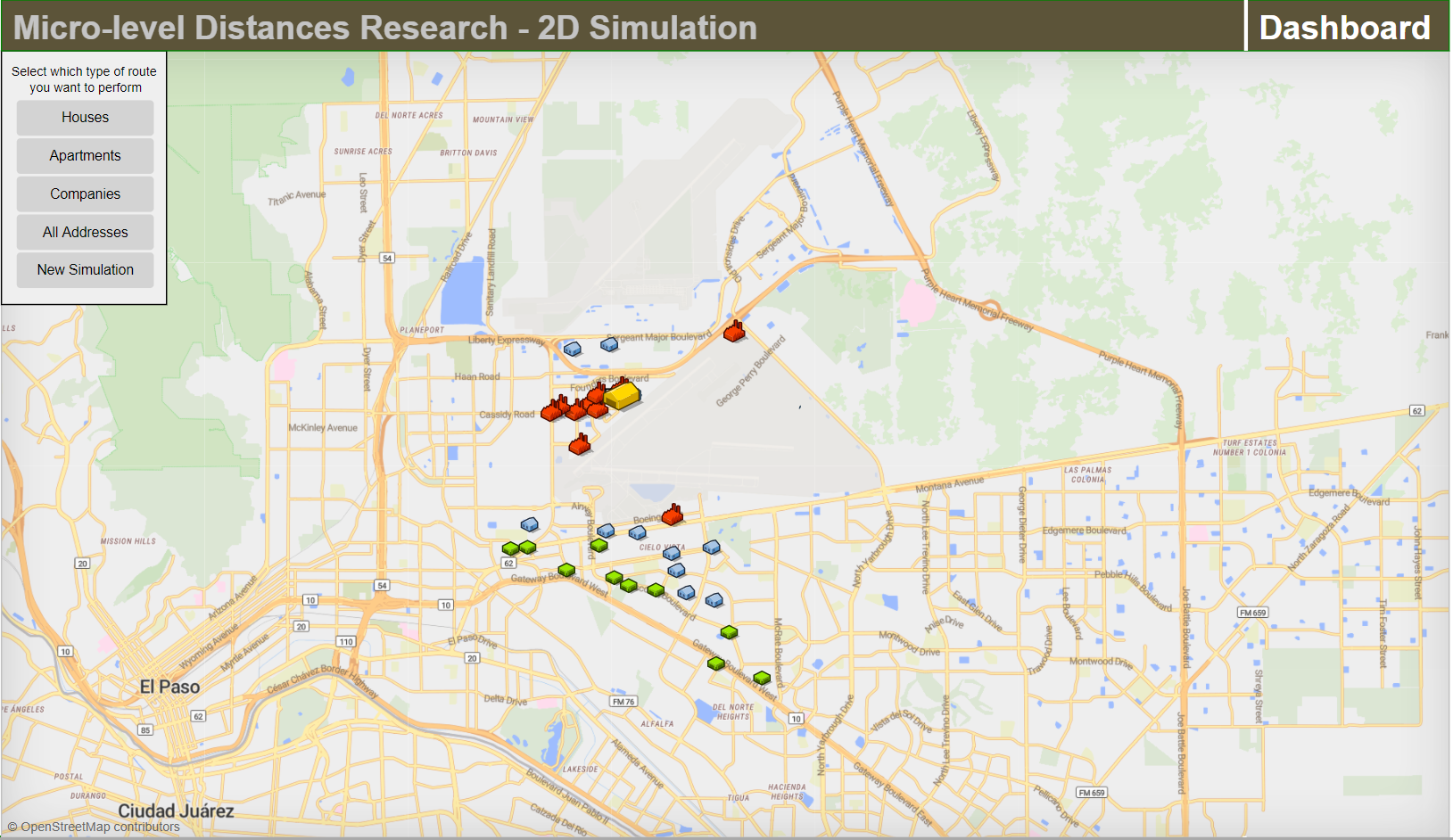
Thesis Title: Optimal Route Planning Considering Microlevel Sequence of Delivery Task Using Computer Simulation
Graduation Date: 12/06/2024
Abstract: As globalization reshapes industries worldwide, supply chain management has evolved into a highly interconnected process that oversees traditional management. Today’s rapid technological advancements enable companies to share information across continents in seconds, facilitating operational alignment and enhancing adaptability to rapid changes. Therefore, industries must adjust to the new technology and use it to their advantage. However, even when this impact can be observed globally, the general impact can be analyzed and eradicated by performing micro-level analysis within the supply chain using technologies to their advantage. Hence, this study aims to investigate micro-level analysis, simulating how different delivery strategies could be adopted for houses, departments, and apartments within the El Paso, TX, location. Key components, such as delivery delays and overall processes, were thoroughly integrated into the simulation framework. The MOST (Maynard Operation Sequence Technique) analysis technique and a Monte Carlo simulation were employed to avoid time bias in the simulated scenarios. In addition, the results obtained from this analysis were embedded using GIS mapping in AnyLogic simulation software. This study highlights the significance of conducting a detailed analysis by illustrating scenarios in which companies may make the right hiring decision with improved resource utilization and revenue. The result also demonstrates the scenarios where companies may have fewer employees failing to make the required deliveries, resulting in unsatisfactory staff/customers due to the high workload and missing deliveries.

Program: Masters in Industrial Engineering
Thesis Title: Integrating Machine Learning and Simulation for Resource Planning of Hospital Systems Based on Predicted Length of Stay
Graduation Date: 08/05/2024
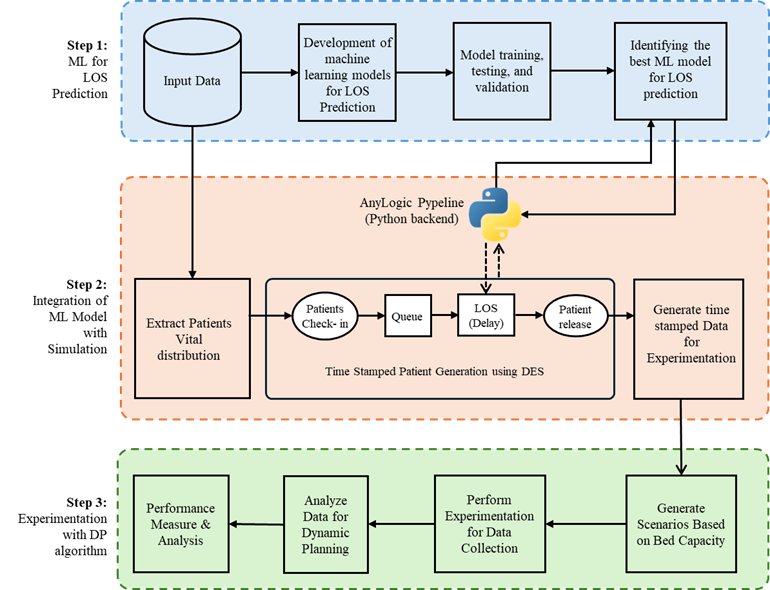
Abstract: Hospital systems are critical to efficient resource planning, especially in the event of operating emergency rooms and high patient invasion. The uncertainty in patient arrival and length of stay (LOS) makes the task complex. Usually, the hospital systems rely on previous experience and run on pre-determined resource planning, often leading to unsatisfactory patient service and low throughputs. The existing literature usually focuses on the traditional optimization techniques based on the available system boundary and neglects the critical factor of patient LOS. This paper closes this research gap and proposes a novel approach for resource planning in hospital systems, considering the impact of patient LOS. The methodology integrates discrete event simulation (DES) and machine learning (ML), making it, to the best of our knowledge, the first paper to showcase such a combination in this area of application. The paper first investigates the ML model to predict LOS based on patients’ vitals. Later, a model was simulated using AnyLogic software to mimic time-independent patient arrival and flow in hospital systems. The simulation model was connected with the trained ML model to predict the LOS in real time. Finally, we propose and integrate the dynamic planning algorithm with the simulation model, which uses the predicted LOS for resource planning. It results in zero (0) service loss, a significant drop in average waiting time, and approximately 10% of resource savings compared to the traditional planning policy. The proposed approach was validated through rigorous experimentation, scenario analysis, and quantitative evaluation matrices.

Program: Masters in System Engineering
Thesis Title: Optimal Route Planning Using Computer Simulation in the Context of Distributor-to-Consumer Supply Network
Graduation Date: 12/06/2023
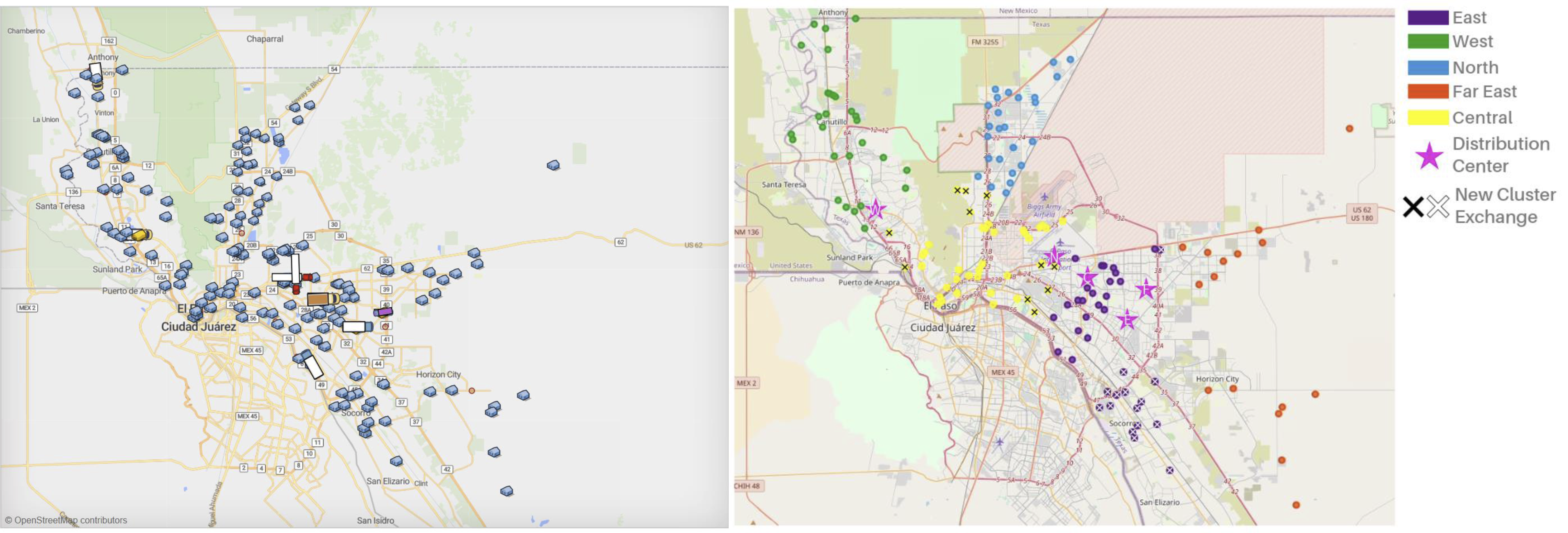
Abstract: Effective route planning for distribution centers is a multifaceted challenge crucial to business success, as it directly impacts time and cost savings while enhancing overall delivery efficiency. Oversight of proper planning can lead to problems and inefficiencies in the distribution process. Hence, this work undertakes a comparative experiment of two delivery strategies in a distributor-to-consumer supply network. While the first strategy investigates the delivery process by zip area, the second strategy considers the clustering of the areas for more streamlined delivery fulfillment. The effectiveness of the delivery process is gauged based on a set of metrics, including total distance traveled, average delivery time, missed target deliveries, and resource utilization. The study specifically addresses five distribution centers in the El Paso, Texas, USA, area and the delivery addresses across various zip codes in El Paso. The delivery network was simulated using the AnyLogic software, with results analyzed on both daily and weekly timelines. Simulation data were systematically logged into the AnyLogic database for subsequent analysis. In doing so, this paper presents a comprehensive analysis derived from observed data, offering a comparative assessment of the two delivery strategies. The findings provide a quantitative evaluation of the effectiveness of route planning within diverse scenarios in end-user supply networks.

Program: Masters in Industrial Engineering
Thesis Title: A Novel Approach for Defect Detection of Wind Turbine Blade Using Virtual Reality and Deep Learning
Graduation Date: 07/09/2023
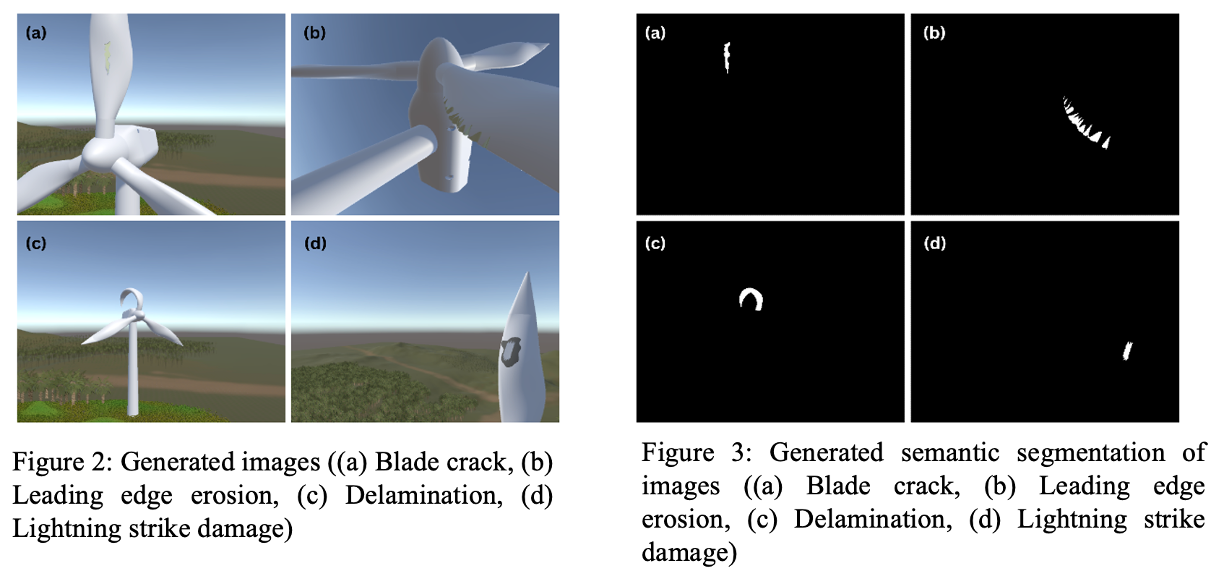
Abstract: Wind turbines are subjected to continuous rotational stresses and unusual external forces such as storms, lightning, strikes by flying objects, etc., which may cause defects in turbine blades. Hence, a periodical inspection is required to ensure proper functionality and avoid catastrophic failure. The task of inspection is challenging due to the remote location and the inconvenient accessibility for human inspection. Researchers used images with cropped defects from the wind turbine in the literature. They neglected possible background biases, which may hinder real-time and autonomous defect detection using aerial vehicles such as drones or others. To overcome such challenges, in this paper, we experiment with defect detection accuracy by having the defects with the background using a two-step deep-learning methodology. In the first step, we develop virtual models of wind turbines to synthesize the near-reality images for four types of common defects - cracks, leading edge erosion, bending, and light striking damage. The Unity® perception package generates wind turbine blade defect images with variations in background, randomness, camera angle, and light effects. In the second step, a customized U-Net architecture is trained to classify and segment the defect in turbine blades. The outcomes of the U-Net architecture have been thoroughly tested and compared with 5-fold validation datasets. The proposed methodology provides reasonable defect detection accuracy, making it suitable for autonomous and remote inspection through aerial vehicles.
Published: